

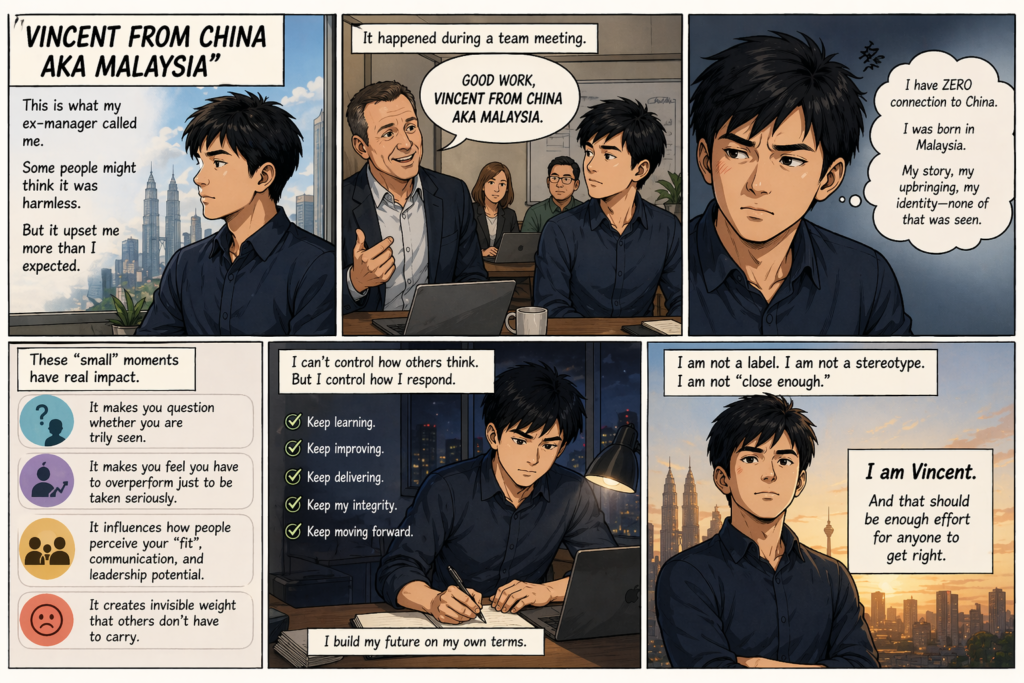
“Vincent from China aka Malaysia”
That sentence was said to me by a former manager.
Some people may read it and think it was harmless, just awkward wording, nothing serious. But it upset me more than I expected.
Earlier this year, I had also been mocked with “ching chong ling long.” At the time, I tried to brush it off. Many people do. You tell yourself it is just ignorance, just a joke, not worth reacting to.
But these moments stay with you.
Some people may read these examples and think they are small or harmless. Yet they reveal something deeper: how easily Asians can be reduced to stereotypes, or treated as interchangeable, as if identity is optional and accuracy does not matter.
I have zero connection to China. I was born in Malaysia. My background, story, and experiences are my own. That should not be difficult to respect.
Bias is not always loud.
It is not always obvious.
Sometimes it appears through careless language, assumptions, or labels.
And in professional environments, that matters.
It can make talented people feel unseen.
It can create pressure to overperform just to be judged fairly.
It can quietly influence decisions about “fit,” communication style, or leadership potential.
These experiences challenged me, but they also strengthened me.
They taught me to communicate clearly.
They taught me to stay composed under pressure.
They taught me to value inclusive leadership and respectful workplaces.
They taught me to judge people by contribution, not assumptions.
Today, I carry those lessons into every team I join.
I bring resilience.
I bring perspective from working across cultures.
I bring professionalism, empathy, and high standards.
And I know how powerful it is when people feel respected enough to do their best work.
The best workplaces do not ask people to shrink to belong.
They recognise talent, character, and potential fully.
That is the kind of environment I believe in, and the kind of value I aim to help build.